Operational challenges
The industrial production of sandwich-structured fire doors involves stringent geometric and construction constraints:
- Decoupling of production flows: the need to produce and process two separate shells (upper and lower) in parallel, using asymmetrical production cycles, prior to assembly.
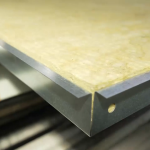
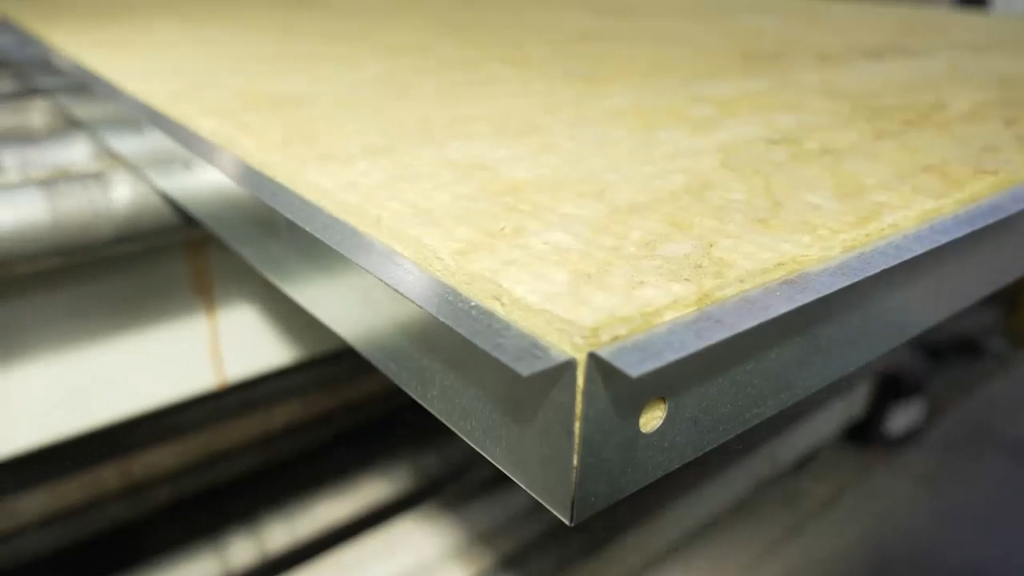
- Finish and structural integrity: the need to firmly join the two metal shells without any protruding mechanical fasteners (screws or rivets), ensuring flatness and certifiable integrity.
- Dimensional variability: handling a wide range of sizes (from narrow 400 mm doors to large formats measuring 2,800 x 1,400 mm) whilst minimising line downtime for set-up.
The strategic solution
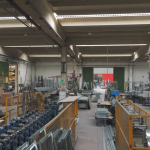
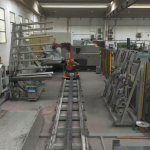
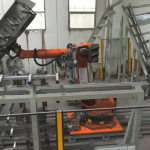
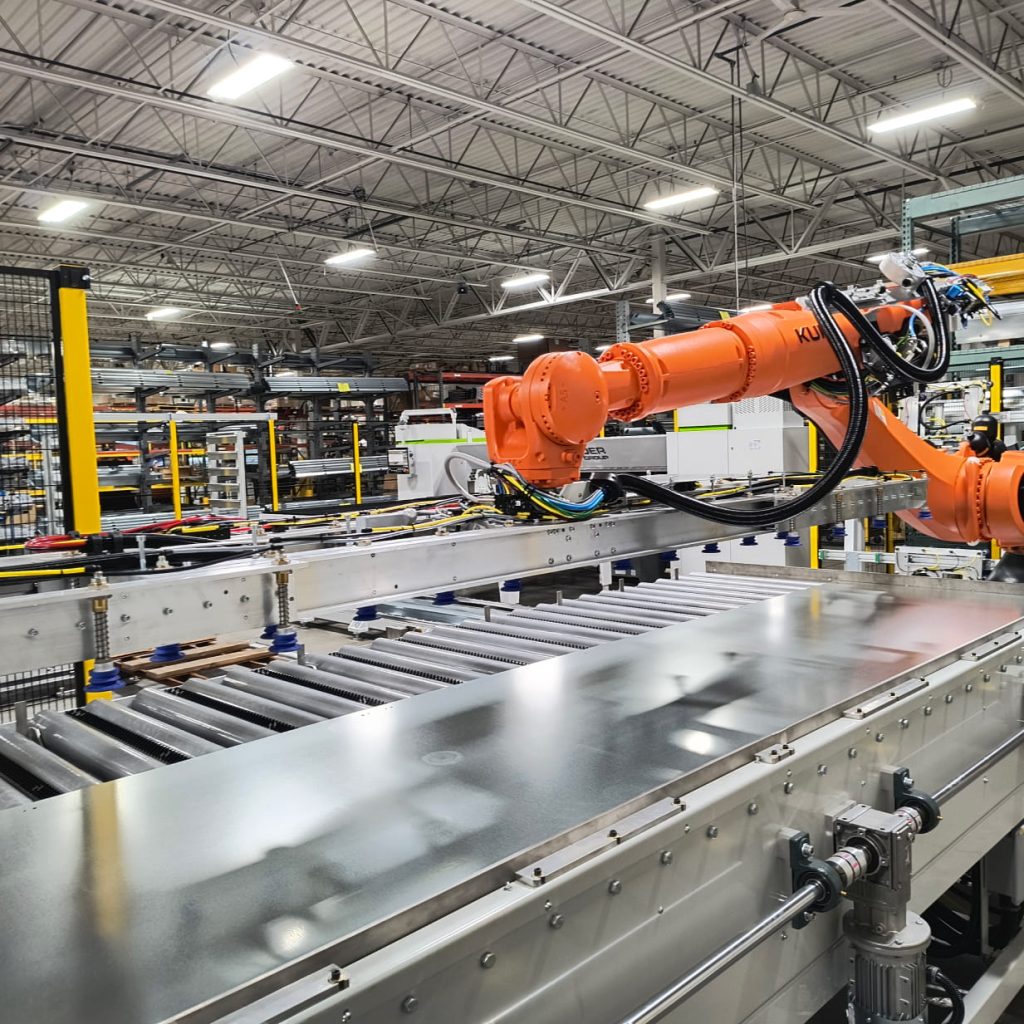
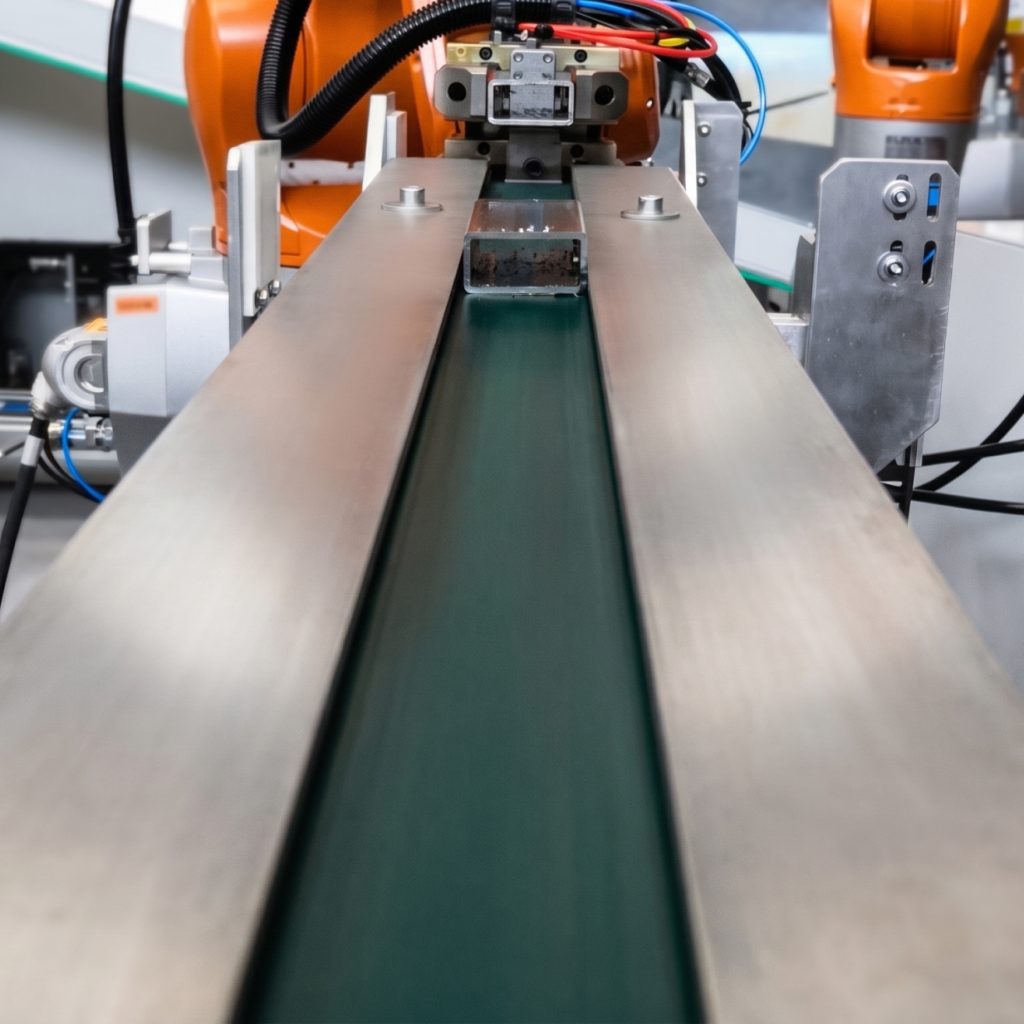
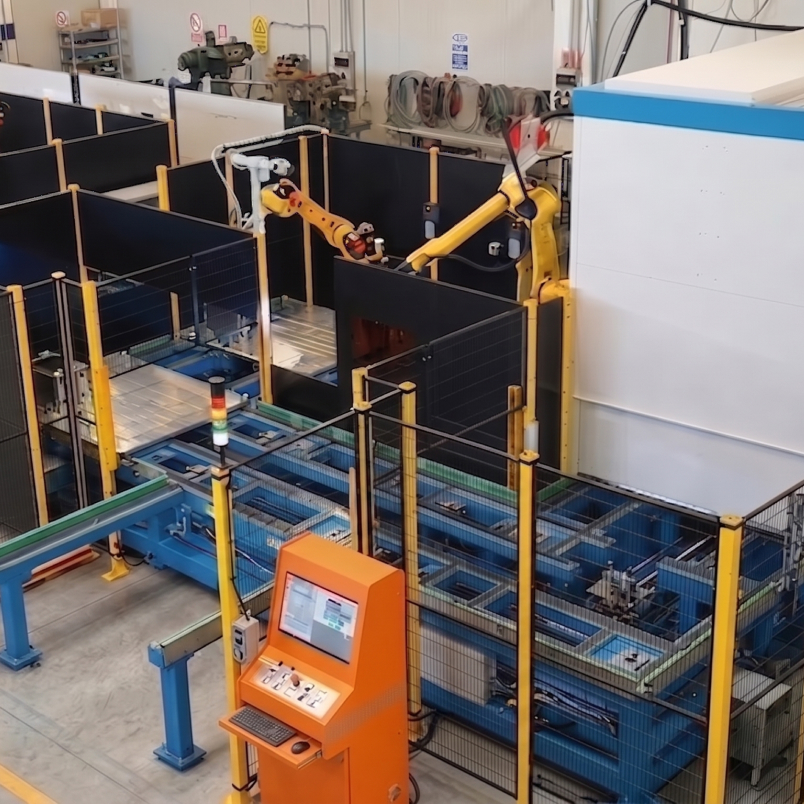
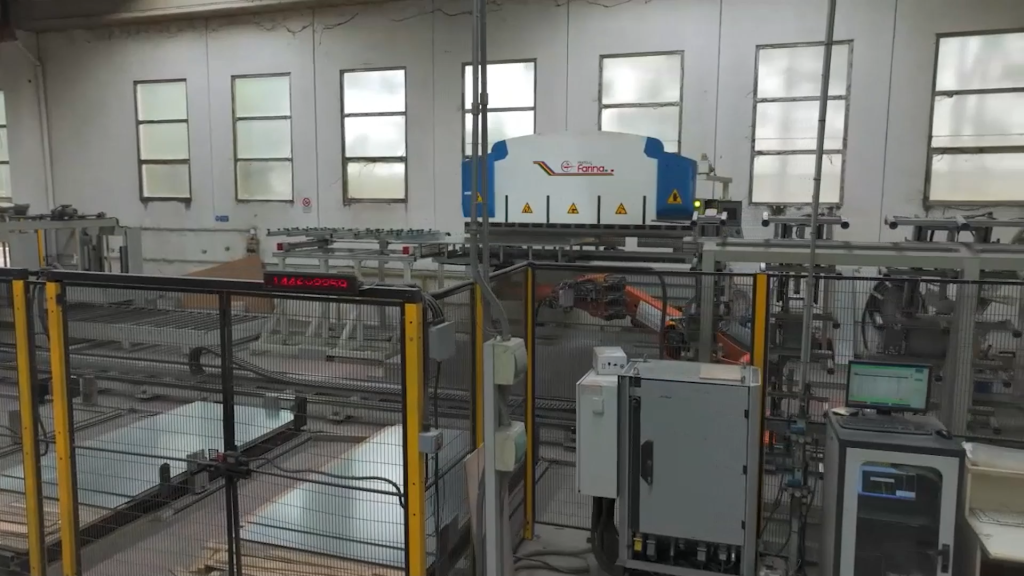
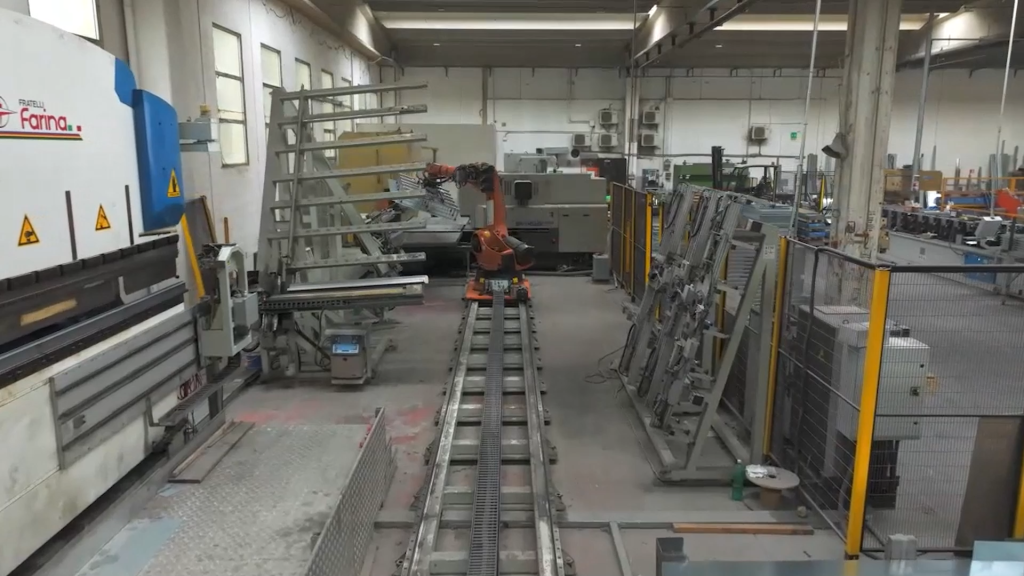
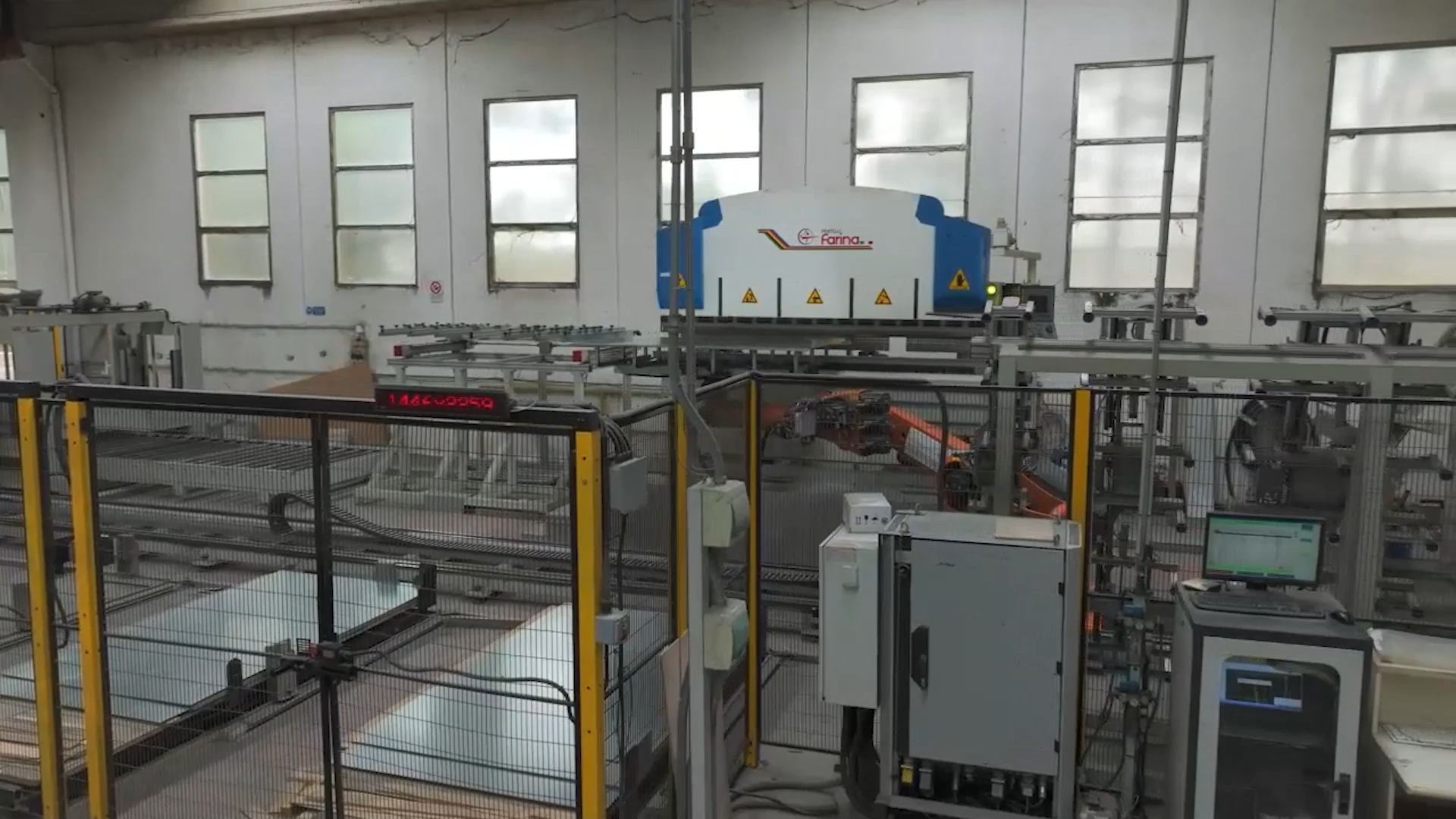
The system incorporates three anthropomorphic robots, machine tools and multi-level conveyor systems:
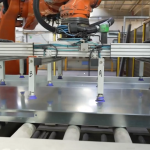
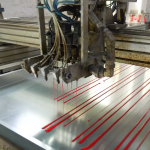
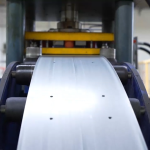
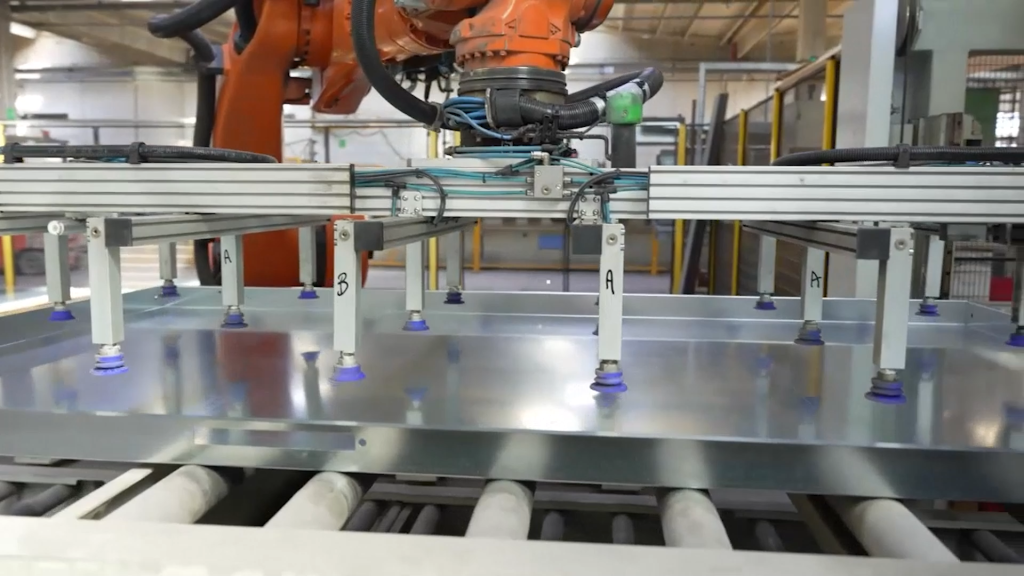
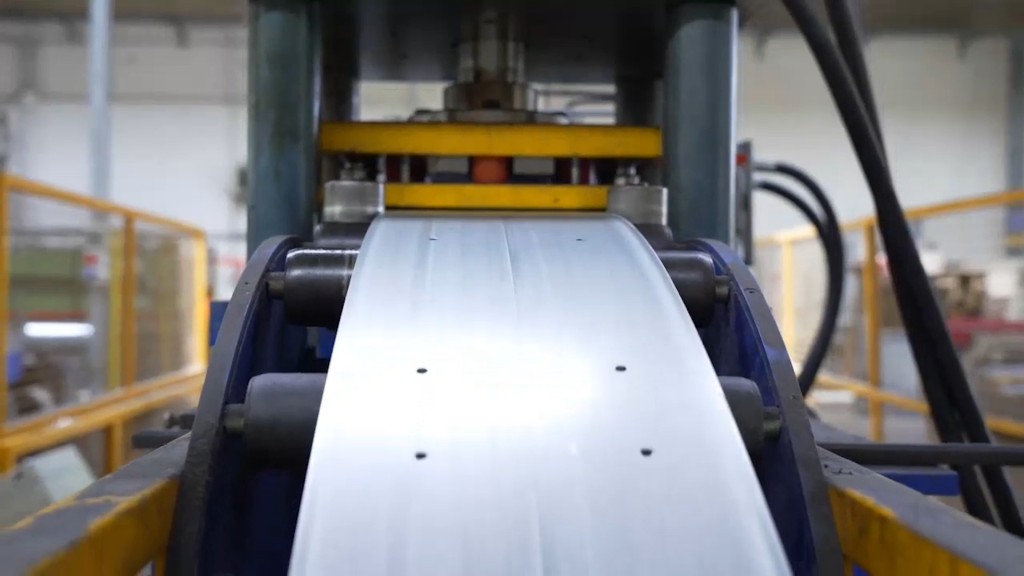
- Alternating flow and bidirectional centring: a first robot retrieves the sheets from a stack, alternating between upper and lower half-shells, and feeds them into an automatic punching machine, sending them to a bidirectional centring station.
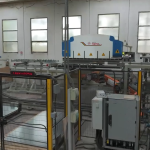
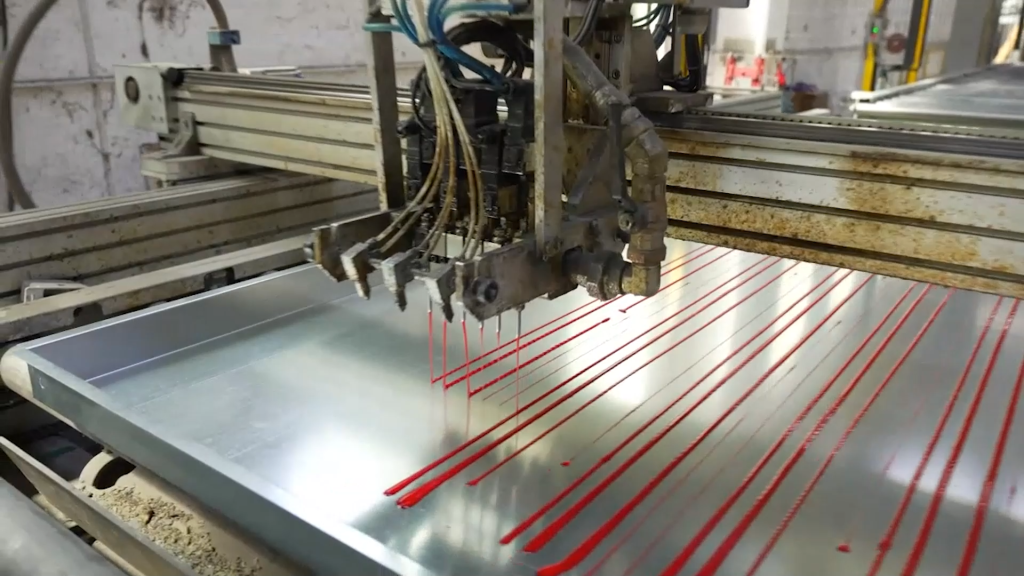
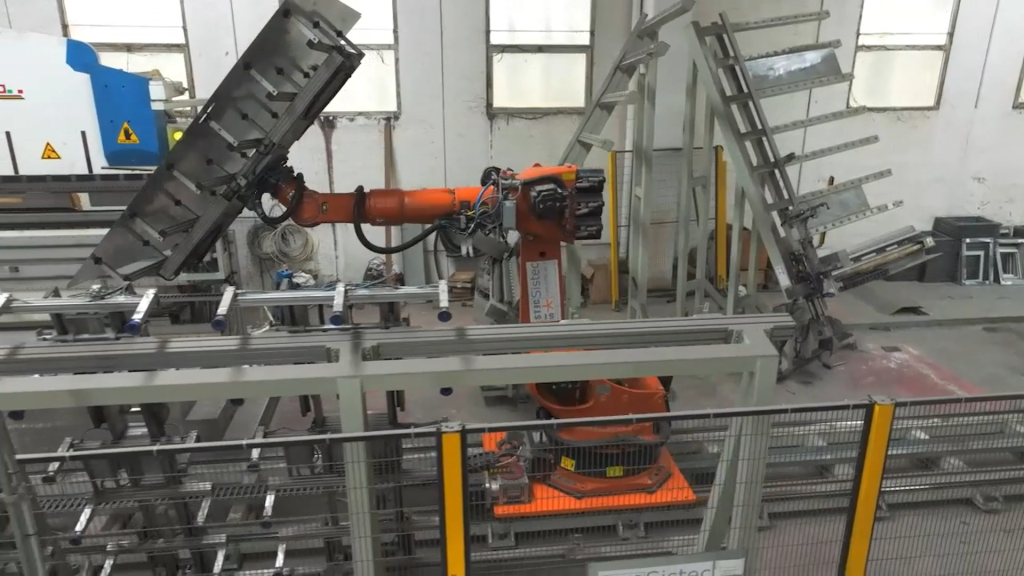
- Ergonomic splitting of routes: a second robot forms the shells on a press brake and sorts them: the top shell travels on a floor-level roller conveyor, whilst the bottom shell travels on a conveyor at working height for automatic glue application and guided insertion of the insulation.
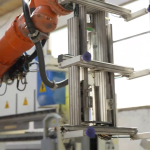
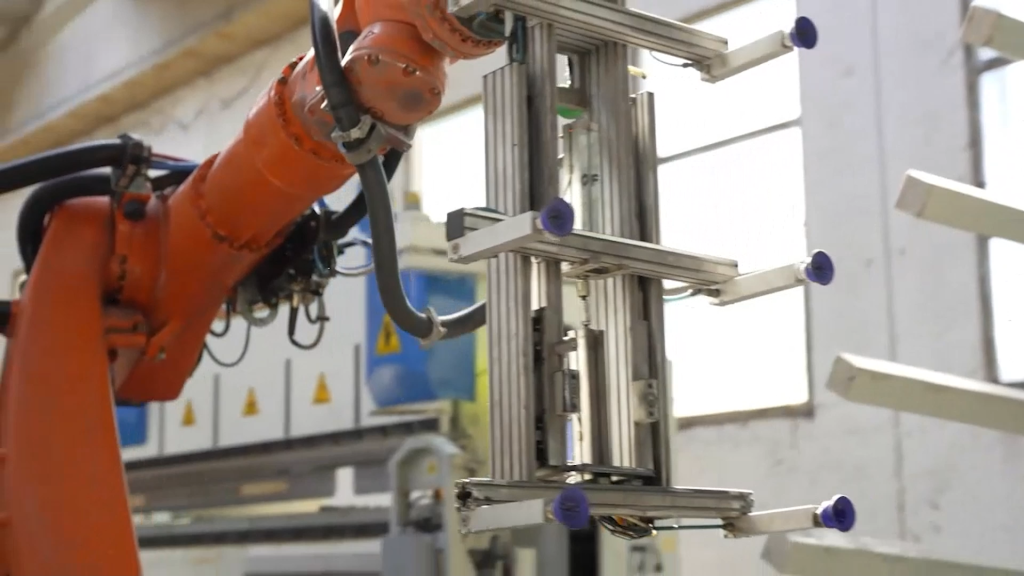
- Robotic flipping and assembly: in the closing cell, the third robot flips the upper shell through 180°, positioning it with millimetre precision onto the prepared lower shell.
- Folding closure using a special tool: the third robot operates a dedicated press-bender fitted with a custom die, folding the outer edges of the lower shell over the upper shell in three sequential passes (along the two long sides and the short end), completing the joining process and unloading the finished door.
Results and value generated
The introduction of the robotised production line has redefined the standards for productivity and component quality:
- Elimination of traditional fasteners: a clean and robust mechanical joint without holes for rivets or thermal bridges on the perimeter profiles.
- Continuous cycle balancing: synchronisation between automated logistics and the insulation layering station eliminates the need for intermediate buffer stock.
- Ergonomics and safety: elimination of manual handling of large-format sheets and heavy loads throughout all stages of forming and closing.
- High production flexibility: dynamic switching between various dimensional combinations of single and double doors, managed via software.